
B-Poly
PHA-rich Biomass

B‑Poly is a complete biomass valorisation solution that enhances the B‑Sludge platform by transforming organic sludge into high‑value bioplastic precursors. Through a combination of anaerobic acidogenic digestion and advanced microbial selection processes, the system produces a PHA‑rich biomass, a key building block for biodegradable, bio‑based polymers.

ACIDOGENIC FERMENTATION

In sewage sludge treatment, acidogenic fermentation is more than a process: it is an innovative pathway that converts “waste” into a valuable carbon source. This approach enables the production of  high-value compounds, namely volatile fatty acids (VFAs), which serve as essential building blocks for downstream bioprocesses and sustainable bioproducts.

Acidogenic fermentation is often the least exploited stage of anaerobic digestion, yet it holds enormous potential. Unlike conventional biogas production, this phase focuses on producing volatile fatty acids (VFAs) rather than methane. By carefully optimising biological process parameters, sludge is transformed into a valuable carbon source, creating high-value compounds for downstream applications and supporting a circular, resource-efficient approach.
Volatile fatty acids (VFAs), including acetic, propionic, butyric, and valeric acids, are key biochemical intermediates with high versatility and multiple industrial applications:
  • Precursors for bioplastics (PHA): VFAs serve as the building blocks for biodegradable and sustainable plastics, helping to reduce reliance on fossil fuels.
  • Substrates for industrial processes: They can feed other fermentation processes, optimising the production of valuable chemical compounds.
  • Platform molecules for green chemistry: VFAs provide sustainable alternatives to petroleum-derived molecules, supporting a transition to a circular and eco-friendly chemical industry.
Acidogenic fermentation takes place in an anaerobic digester adapted for the acidogenesis phase, where a mixed community of acidogenic bacteria converts solubilised COD into volatile fatty acids (VFAs). The biological reaction is optimised for maximum VFA production by carefully controlling key parameters:
  • Temperature
  • Retention time
  • Organic load
Additionally, sludge pre-treatment, such as HTC, enhances conversion efficiency and increases VFA yield. To ensure the effectiveness of acidogenic digestion and process optimisation, our approach is based on detailed analysis. Through analyses conducted at our in-house laboratory or at certified external partners, we are able to characterise the outputs of this phase.

SOLID-LIQUID SEPARATION

The acidogenic digestate is separated using a filter press, as described in the B-Sludge module. The liquid fraction, rich in VFAs and nutrients, is sent to the aerobic fermentation stage, where VFAs are converted into PHA-rich biomass using the innovative B-Plas system.

This stage is crucial for the overall efficiency of the B-Poly module, as it reduces the volume of sludge for disposal while maximising the recovery of valuable biopolymers.

CONTINOUS AEROBIC FERMENTATION

PHA-rich biomass is produced continuously during both the selection and accumulation phases.

Selection is based on Feast & Famine strategy, where feast and famine zones coexist, creating substrate and oxygen gradients that promote the growth and selection of PHA-accumulating bacteria.

During the accumulation phase, an excess of carbon increases intracellular PHA content. The PHA-rich biomass is continuously harvested by centrifugation, while the excess organic substrate in the liquid phase is recirculated to the selection stage.

This configuration enables accurate process control, lowers operating costs, and ensures a scalable solution easily integrated into existing industrial facilities.
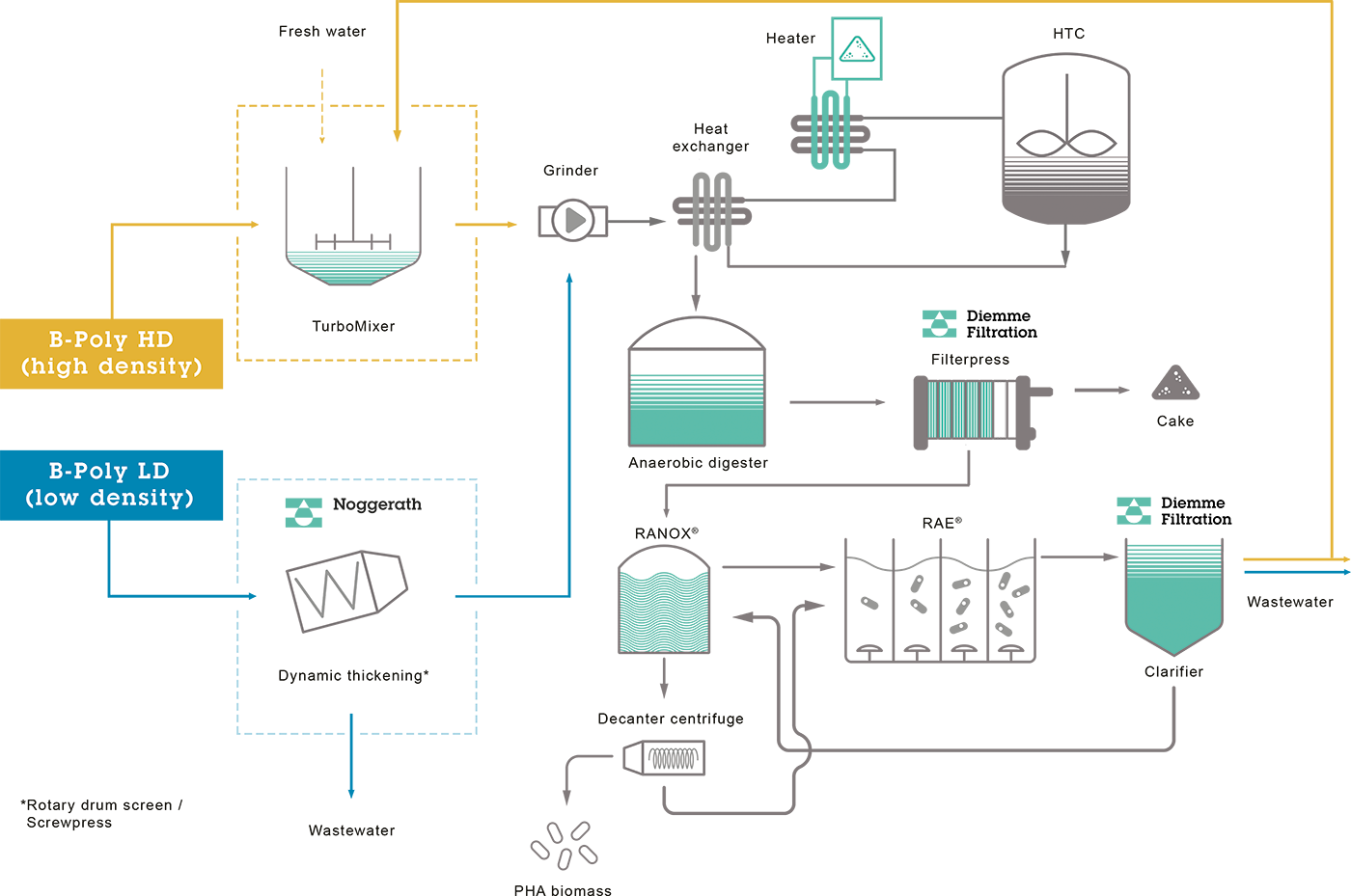
To ensure maximum efficiency, detailed laboratory-scale testing is carried out to assess and validate all key parameters. These include substrate consumption rates, cell growth rates, conversion yields, and PHA production performance. This experimental approach makes it possible to identify the optimal process conditions for each sludge type, ensuring reliable operation and consistent results. At the end of the process, a PHA-rich biomass is obtained, dried and stabilised, making it suitable for the subsequent extraction of the biopolymer.

Want to know
more about
B-Plas technology?